
Investing in Persian Rugs: A Timeless and Lucrative Endeavor
SYMBOLISM
Throughout history, both in Islamic lands and Europe, luxurious floor textiles have symbolized wealth, power, and sanctity. Antique Persian carpets were not merely decorative objects; they carried meaning, authority, and cultural depth.
From the 14th century onward, Islamic carpets appeared in Italian religious paintings, positioned beneath the Virgin Mary’s feet or draped across altars, elevating their symbolic status. By the late 16th century, antique Persian rugs had become a familiar presence in Northern European portraits, genre scenes, and still lifes, signaling refinement, affluence, and social standing.
This tradition extended into royal and aristocratic interiors well into the modern era. The continued presence of antique Persian carpets in historic residences and exhibitions reflects their enduring role as symbols of prestige and cultural continuity.

Sir James Gunn, Conversation piece at the royal lodge, Windsor, 1950
RARITY
Many of the world’s most important antique rugs were never intended for export. Courtly carpets woven during the Safavid era were created for palaces and elite settings, making their survival exceptionally rare.
The Wagner Garden Carpet exemplifies this rarity. Woven in southeastern Iran in the 17th century, it is one of only three earliest surviving Persian garden carpets in existence. Such antique hand knotted rugs are valued not only for their beauty but also for their scarcity, historical context, and exceptional craftsmanship.
The limited number of surviving antique Persian carpets places them among the most sought-after objects in the world of textile connoisseurship.
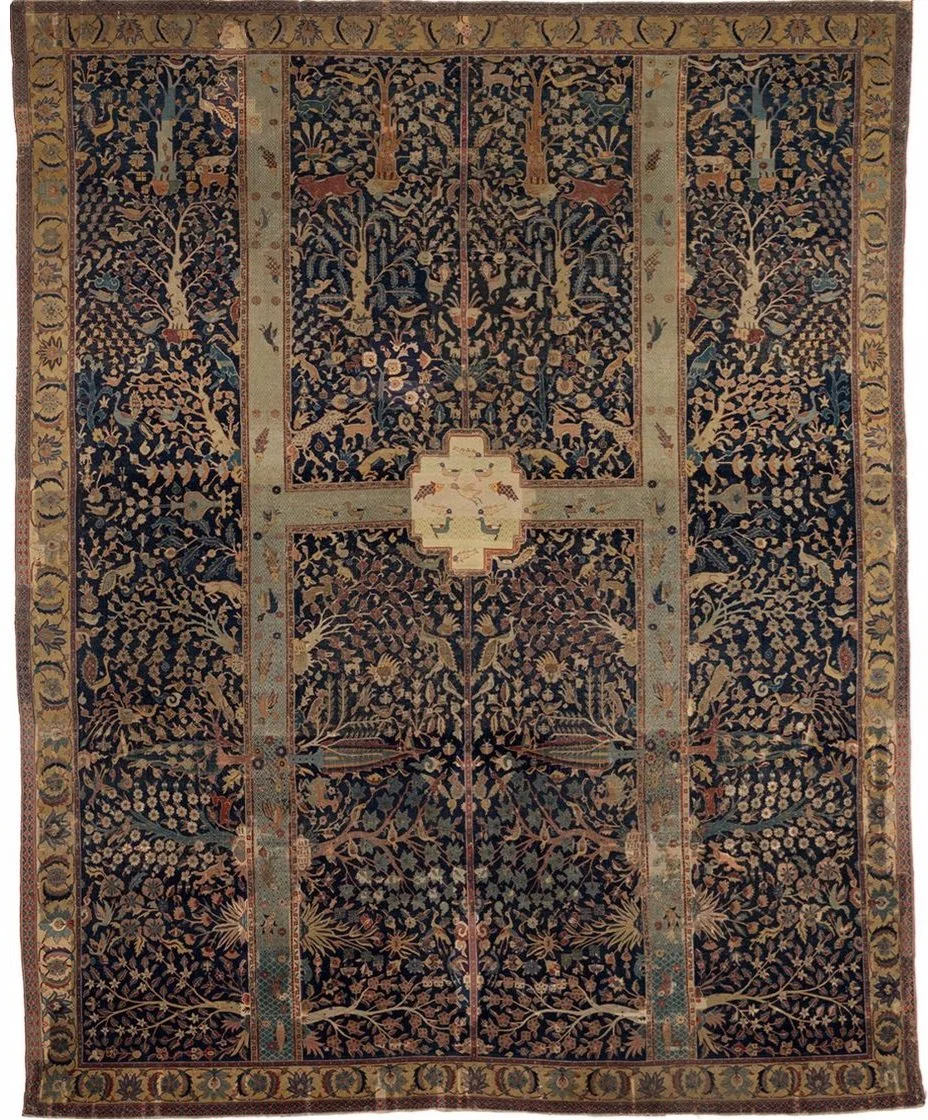
Wagner Garden Carpet, central Iran, early 17th century, cotton warp; wool, cotton, and silk wefts; and wool pile, the Burrell Collection, Glasgow.
SECURITY
In an investment landscape shaped by volatility and shifting trends, tangible assets with enduring value offer a sense of security. Among these, antique Persian rugs stand apart as cultural artefacts with proven longevity.
Unlike speculative assets, antique rugs combine material worth, historical relevance, and global demand. Their value is anchored in craftsmanship, age, and authenticity, qualities that do not fluctuate with short-term market sentiment.
For collectors and investors alike, antique Persian carpets represent stability rooted in centuries of appreciation and preservation.

Rothschild Tabriz Medallion Carpet is a safavid carpet made in Persia in the 16th century sold at christie’s auction house in 1999 and is now in the permanent collection of the Museum of Islamic Art in Doha
HERITAGE AND TIMELESSNESS
Antique Persian rugs embody a heritage woven into the cultural history of Iran over millennia. Each piece reflects regional identity, artistic tradition, and master-level skill passed down through generations.
Renowned for intricate design, natural materials, and disciplined weaving techniques, antique Persian carpets have retained their desirability across centuries of changing tastes. Owning such a piece is both a cultural acquisition and a timeless investment that transcends trends and generations.

President Harry Trueman sitting in his office with an isfahan seirafian persian rug

Queen Elizabeth welcoming guests on top of her Isfahan seirafian Persian rug
EXCLUSIVITY
Authentic antique Persian carpets are inherently exclusive. Handwoven using traditional methods, each rug is a singular work of art shaped by time, use, and human hands.
As mass production dominates modern markets, the finite nature of antique rugs only increases their desirability. Collectors value antique hand knotted rugs for their individuality, imperfections, and irreplaceable character, qualities that cannot be replicated.
This exclusivity is central to their enduring appeal and long-term value.

An isfahan seirafian displayed during the wedding ceremony of Frederick Christian, Prince of Denmark with Mary Elizabeth Dunldsen, Princess of Denmark.
HEDGE AGAINST INFLATION
Tangible assets such as antique Persian carpets have historically served as effective hedges against inflation. Unlike paper currencies, they retain intrinsic value rooted in material quality, craftsmanship, and cultural importance.
As economic uncertainty and currency fluctuations persist, antique Persian rugs continue to function as stores of value that tend to appreciate over time. Their durability and global demand offer protection against the erosion of purchasing power.

Sheikh Zayed, Ruler of the united arab emirates sitting with a hunting scene persian rug from isfahan
INVESTMENT PERFORMANCE
Historically, antique Persian carpets have demonstrated strong investment performance. Their rarity, coupled with growing global interest from collectors and institutions, has driven sustained appreciation.
Demand continues to expand, particularly among high-net-worth individuals and emerging markets with an increasing appetite for cultural and luxury assets. This positions antique Persian rugs as compelling long-term investments with both historical credibility and future potential.

Princess lalla Salma on top of her Isfahan seirafian before her wedding to the prince of Morocco
TANGIBLE ENJOYMENT
Beyond financial considerations, antique Persian carpets offer daily, tangible enjoyment. Displayed in homes, galleries, or private collections, they enhance spaces with warmth, depth, and quiet authority.
Collectors benefit not only from value appreciation, but from living with objects that carry history, artistry, and meaning. Few investments offer this balance of aesthetic pleasure and cultural resonance.

The shah of Iran presenting a hekmat nejad Isfahan rug to the king of Thailand as a gift
DIVERSIFICATION BENEFITS
Diversification is essential to resilient investment strategies. Antique rugs provide exposure to a non-correlated asset class that operates independently of traditional financial markets.
By incorporating antique Persian carpets into a broader portfolio, collectors and investors can reduce risk while enhancing long-term stability and returns.
Investing in antique Persian carpets represents a thoughtful and rewarding choice for those seeking stability, appreciation, and diversification. With their deep heritage, rarity, inflation resistance, and enduring appeal, antique Persian rugs remain among the most respected tangible assets in the world.
According to the Knight Frank Luxury Investment Index, art and collectible investments led the luxury segment in 2023, reinforcing the relevance of cultural assets within sophisticated investment portfolios.
www.knightfrank.com/research/article/2023-03-01-art-tops-2022-luxury-investment-index-


Late 17th century Kirman vase carpet sold for $9.5 Million USD at christies
Chart showing art leading investments in 2023