
Bakshayesh Carpets
Origins
Bakshayesh carpets originate from the Bakshayesh region, situated near the town of Heriz in northwestern Iran. Known for its deep-rooted tradition in rug weaving, Bakshayesh has been a significant contributor to Persian carpet artistry for centuries.
These carpets are highly regarded for:
Robust construction
Unique designs
Design
Bakshayesh carpets are renowned for their striking, bold designs.
Design characteristics include:
Large, central medallions
Surrounding geometric patterns
Intricate floral motifs
The designs often incorporate a vibrant color palette, including:
Rich reds
Deep blues
Warm earth tones
Contrasting highlights such as ivory and gold
These visual qualities place Bakshayesh carpets among the most expressive examples of geometric Persian rugs produced in village weaving traditions.
Construction
Crafted by hand, Bakshayesh carpets use high-quality wool known for its durability and rich texture.
Construction details:
Wool is carefully spun and dyed to enhance visual appeal and resilience
Carpets are hand-knotted using traditional Persian techniques
The result is a sturdy and long-lasting pile
This craftsmanship makes Bakshayesh carpets exceptional examples of handwoven Persian rugs.
Size and Shape
Bakshayesh carpets come in various sizes to suit different spaces:
Small accent rugs
Large area rugs
They are commonly available in:
Rectangular shapes
Square shapes
Custom sizes and shapes can also be created to meet specific design requirements.
Quality and Collectability
Bakshayesh carpets are prized for:
Exceptional quality
Distinctive designs
They are highly valued by collectors and interior designers for their craftsmanship and aesthetic appeal. Due to their robust construction and unique artistic elements, Bakshayesh carpets are considered valuable investments.
Cultural Significance
Bakshayesh carpets reflect a rich tradition of Persian weaving. They represent:
Artistic heritage of the Bakshayesh region
Cultural depth shaped over generations
These carpets embody craftsmanship and artistic expression handed down through generations, placing them firmly within the tradition of traditional Persian rugs.
Evolution
Over time, Bakshayesh carpets have evolved to incorporate both traditional and contemporary design elements.
While maintaining:
Classic bold patterns
Traditional color structures
Modern Bakshayesh carpets often feature:
Updated hues
Reinterpretations of traditional motifs
This evolution allows them to appeal to a wide range of tastes and styles.
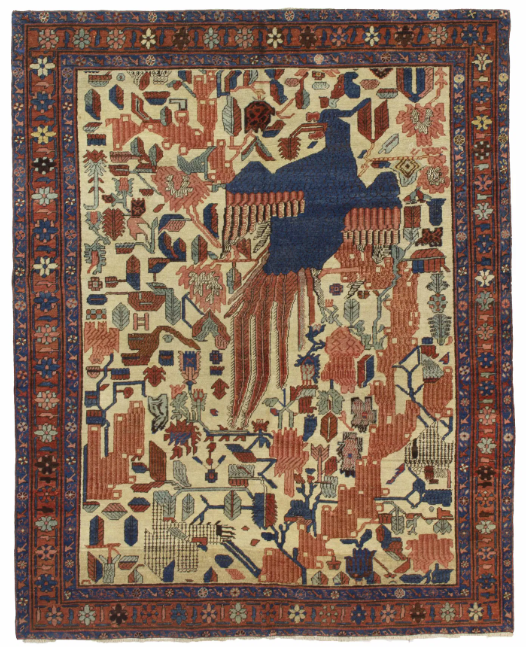
Antique Phoniex bakshaish carpet that is best of type
History
Early Origins
Bakshaish carpets, originating from the village of Bakshaish in northwestern Iran, boast a rich history that quite possibly dates back to the 11th century during the Seljuk period. Scholars suggest:
The Seljuks introduced the symmetrical (Turkish) knot to the region
This laid the groundwork for weaving techniques that would define Persian rug artistry
Located near Tabriz, Bakshaish became one of the most influential weaving centers in Persian Azerbaijan, blending:
The aesthetic freedom of village weavers
Echoes of classical court designs
Design Language
These carpets are admired for their abstract, large-scale motifs that reinterpret traditional Persian forms through a rustic, expressive lens.
Characteristic features include:
Oversized medallions
Stylized floral patterns
Bold use of space and color
Weavers often employed natural vegetable dyes, yielding:
Rich earth tones
Jewel-like blues and reds
These colors age beautifully over time. Bakshaish rugs are considered among the finest examples of village weaving, maintaining a balance between spontaneity and design coherence.

Antique Phoniex and dragon bakshaish carpet, a staple of seasoned collectors
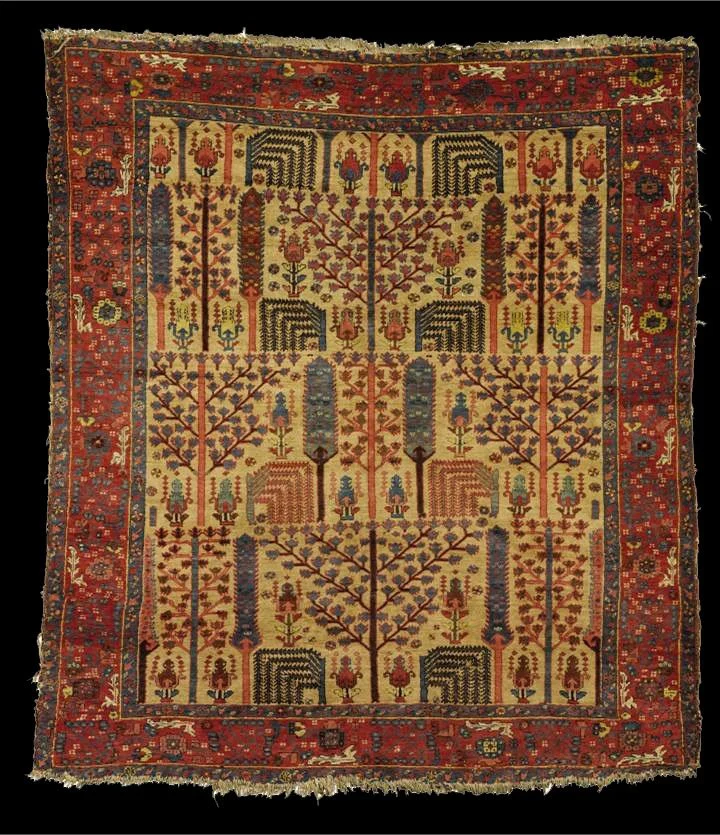
A weeping willow design that is stunning replete with camel hair field
Second Revival
During the 19th century, especially in the Second Golden Age of Persian weaving (circa 1800–1910), Bakshaish carpets reached a pinnacle of artistic excellence.
During this period:
Weavers often broke from rigid templates
Singular works of textile art were created
Creativity was expressed within traditional frameworks
These pieces were typically room-sized and featured inventive layouts.
Recognition and Legacy
Bakshaish carpets from this era are now treasured by:
Museums
Collectors
Designers
They are admired for their originality and enduring beauty. Institutions such as the Claremont Rug Company have helped elevate their status by preserving their legacy and sharing their stories with modern audiences.
Iconography and Symbolism
Many Bakshaish carpets feature distinct iconography, including:
Phoenix and Dragon
Weeping Willow
Tree of Life
Angular animal figures
These motifs connect the carpets to ancient Persian mythology and symbolism. Rendered with geometric flair, these narrative elements give the rugs both visual and cultural depth.
Collectors and Prestige
The uniqueness and artistry of Bakshaish carpets attracted elite collectors. Historical examples include:
Members of the Rothschild family
European aristocrats
These collectors acquired Bakshaish carpets for their estates, recognizing both their historical value and aesthetic rarity.

A Gorgeous camel field all over bakshayesh carpet
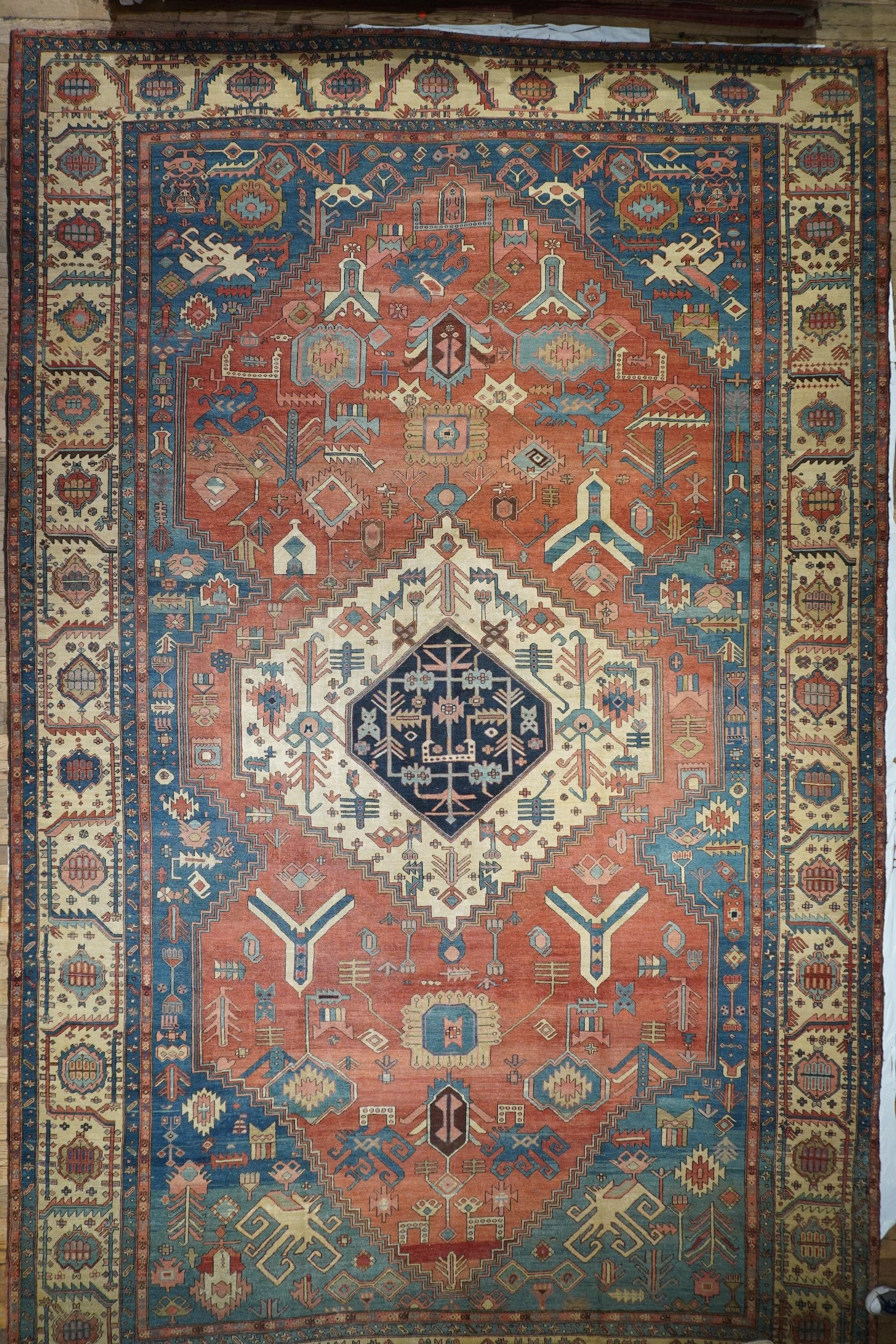
A beautiful bakshaish carpet with vivid natural dyes, the abstract design is stunning